


Ahmo Letter
A Sky Full of Stars: How to Photograph the Milky Way at the Uyuni Salt Flat
Can anyone capture a sky full of stars at the Uyuni Salt Flat? In reality, even on a clear day, the Milky Way and its mirror reflection look completely different depending on the moonlight, the clouds, the wind, and the state of the water's surface. The photo so many people dream of on a trip to Bolivia — where the sky and the earth seem joined by starlight — comes together only when the timing, the location, and your basic settings all line up. Here's how to capture the Milky Way a little more clearly at the Uyuni Salt Flat, and how shooting differs between the wet and dry seasons.
When Is the Milky Way Best Seen at Uyuni?
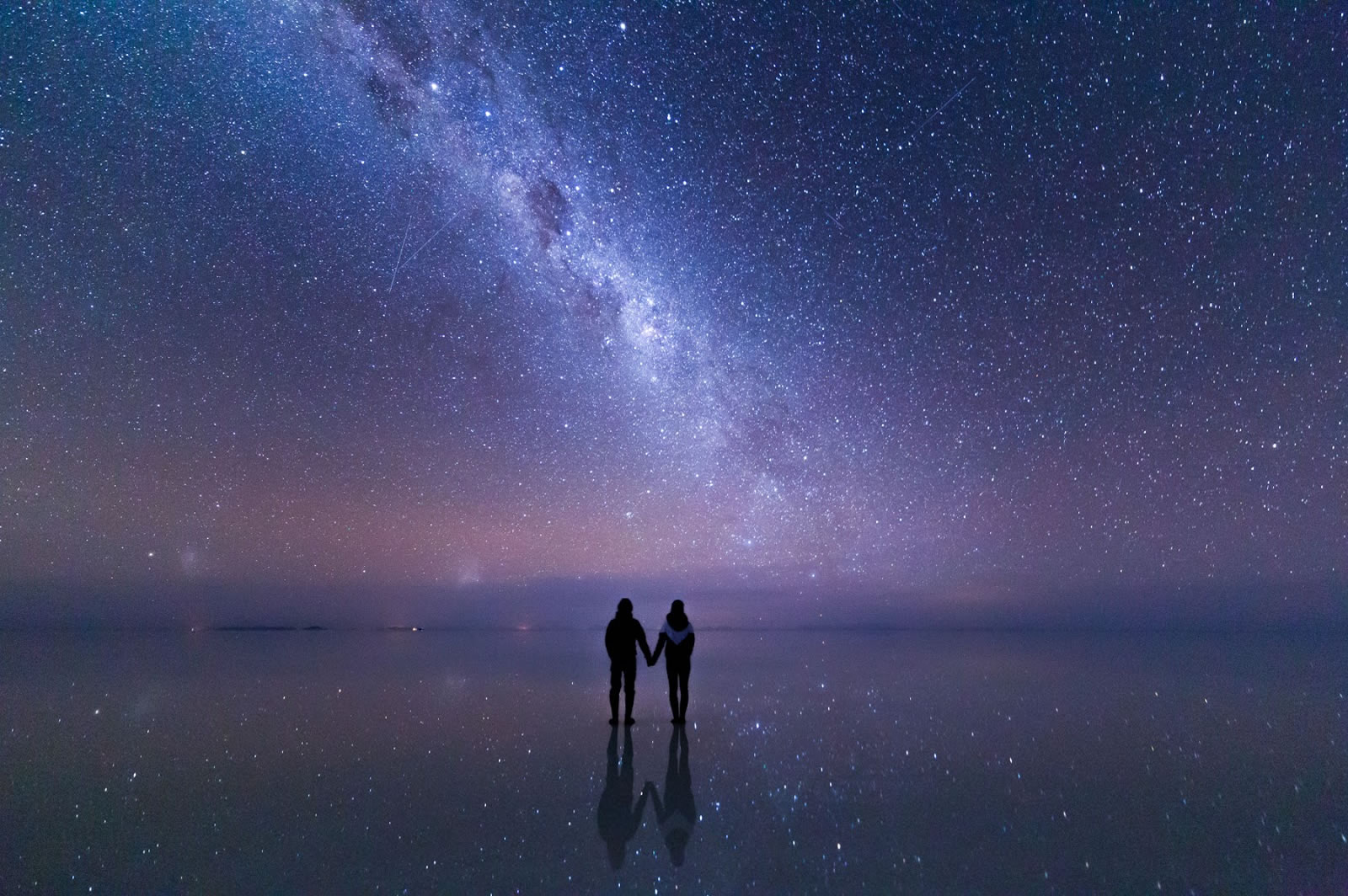
- Nights With Little Moonlight
If you want to see the Milky Way clearly, nights near the new moon work better than a full moon. When the moonlight is strong, the night sky brightens and the Milky Way's faint glow can be hard to make out. But rather than just checking the date, it's important to also see whether the moon is actually up during your shooting window. - Days With Few Clouds and Little Wind
Even thin clouds can leave the night sky looking hazy in a long-exposure shot. If you want to capture star reflections in the wet season, wind strength matters too — when the wind is strong, the water's surface ripples and the starlight won't reflect clearly. - Places With Little Artificial Light
You can see the stars more clearly deep inside the salt flat, where there's less light pollution than in the town of Uyuni. If you're after Milky Way photos, it's worth checking in advance whether your itinerary includes stargazing and night photography.
Check the Moon Before You Shoot
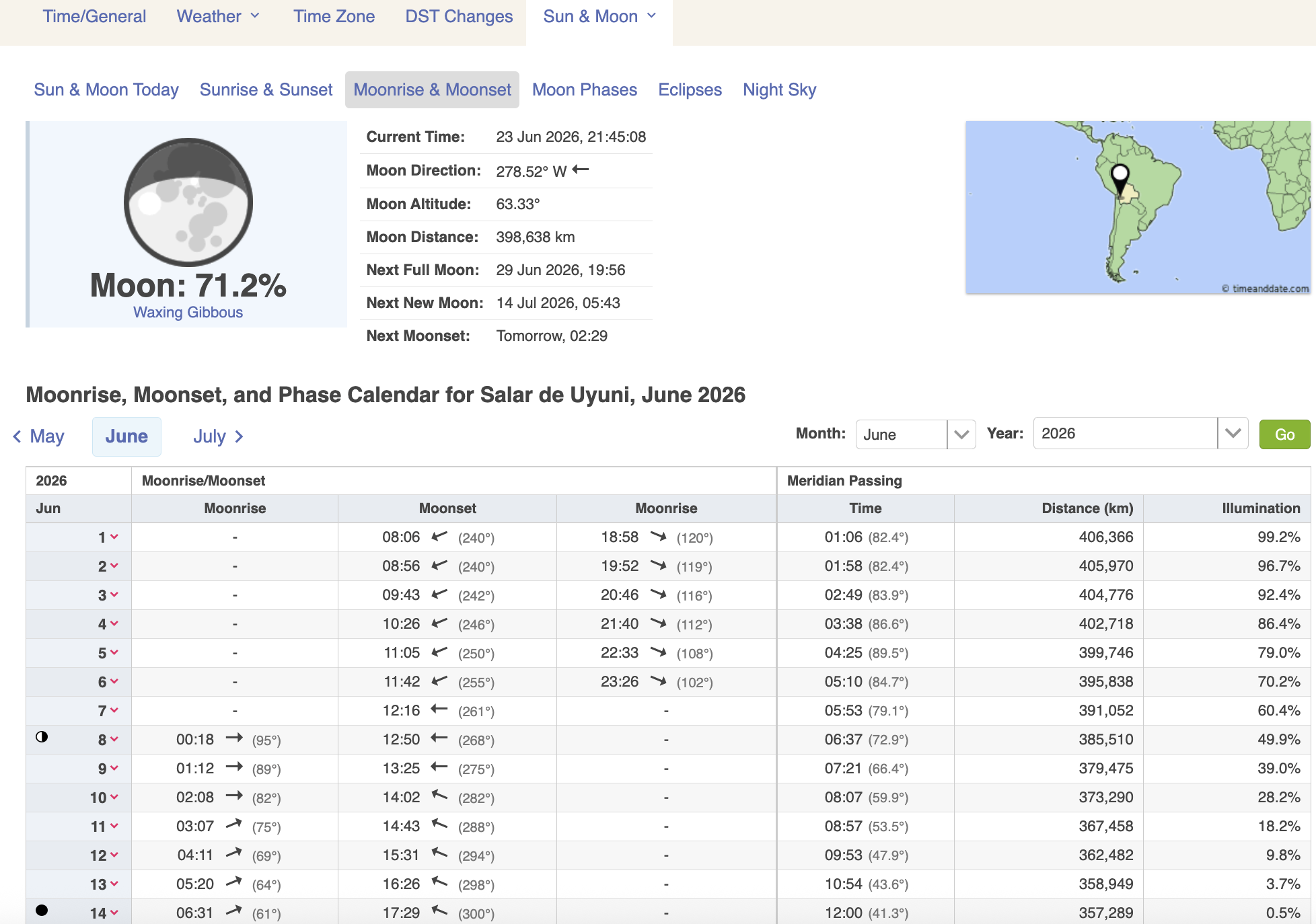
You can check the moonlight by searching for Salar de Uyuni on Time and Date. On the table, you only need to look at three things.
1. Illumination
This shows how bright the moon is. The closer to 0%, the less moonlight there is — which is better for Milky Way photography.
2. Moonrise
This is the time the moon rises. If the moon comes up before you shoot, the night sky may brighten.
3. Moonset
This is the time the moon sets. If the moon goes down before you shoot, you can photograph under a darker sky.
In short, you want a day when the Illumination is low and the moon isn't up during your shooting time.
How Do Photos Differ Between the Dry and Wet Seasons?
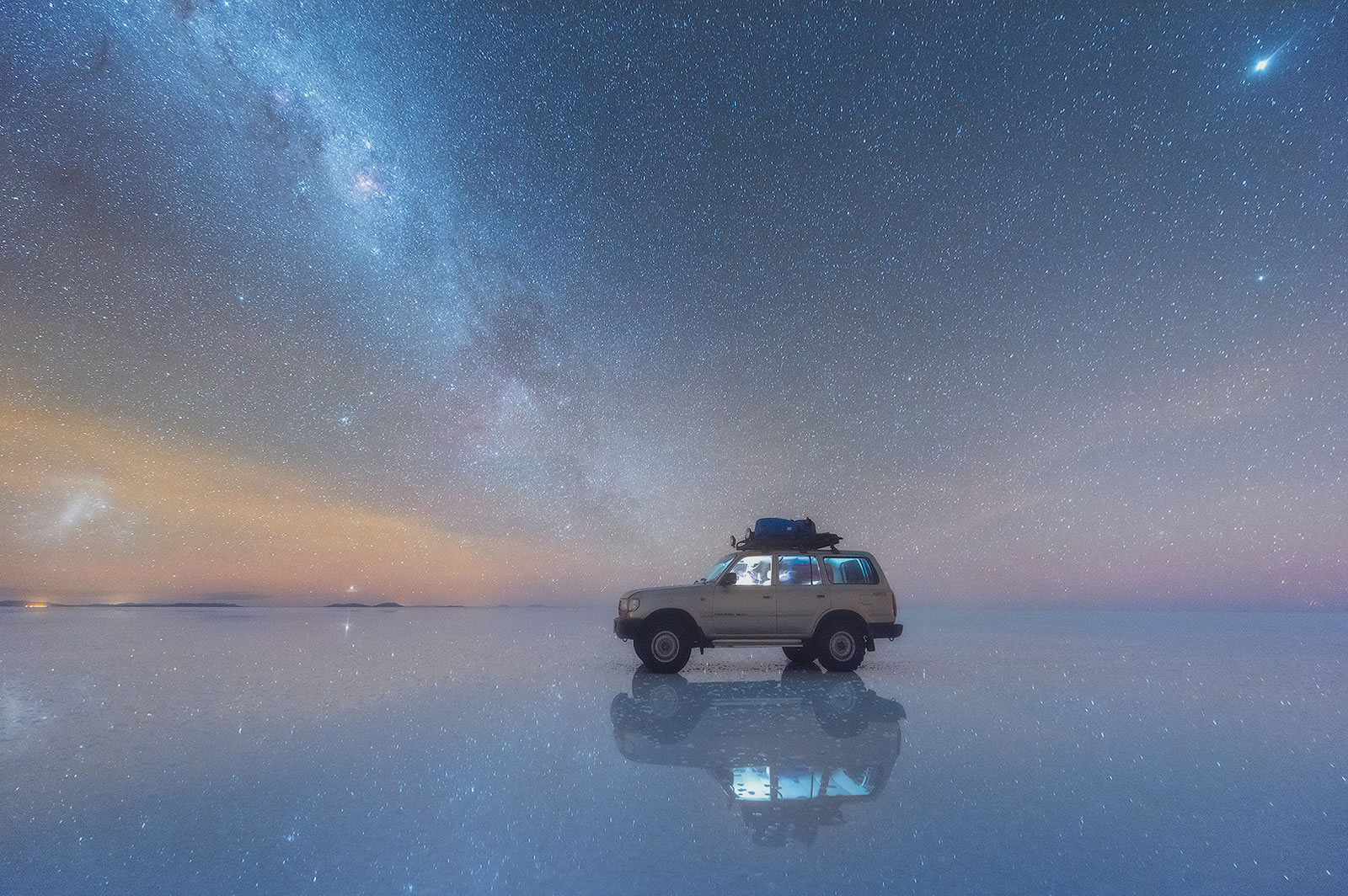
🌌 A Crisp Night Sky in the Dry Season
In the dry season, you can capture the white salt ground together with the stars overhead. With no water on the ground, mirror-like reflection shots are difficult, but it's a great time to photograph a crisp Milky Way stretching over the white Uyuni Salt Flat.
✨ Starlight Reflections in the Wet Season
When a shallow layer of water pools in the wet season, you can hope for Uyuni's signature shot — the stars and the Milky Way mirrored on the surface. That said, if there's a lot of cloud and rain, or the water is deep and the wind strong, a clear reflection is hard to come by.
If you want to capture the Milky Way itself crisply, consider the dry season; if you want a mirror landscape lit by starlight, consider the wet season.
3 Tips for Great Milky Way Photos at Uyuni
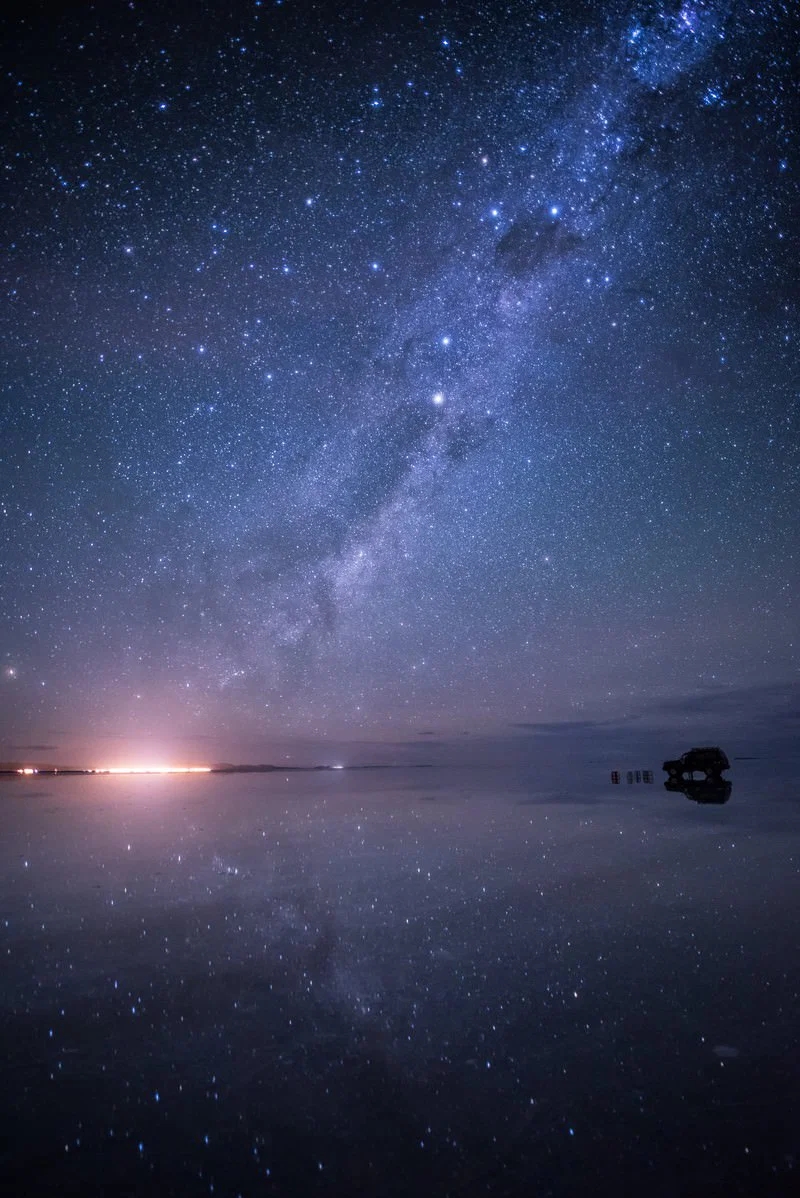
1. Keep It Steady
Because Milky Way photos take in light over a long exposure, even the smallest shake can blur them. Mount your camera or smartphone on a tripod and set a 2–3 second timer.
2. Test Several Shots
The brightness of the night sky changes with the moonlight and the clouds. With a camera, use a wide aperture and a long exposure; with a smartphone, use night mode or pro mode — and take several shots to compare. Autofocus may struggle on a camera, so it's best to zoom in on a bright star and focus manually.
3. Capture the Uyuni Ground, Too
If you shoot only a big Milky Way, it can end up looking like star photos from anywhere else. Bringing in the salt flat's horizon and ground, along with people or vehicles, makes Uyuni's vast sense of space come alive. In the wet season, you can even capture the stars reflected on the water, creating Uyuni's signature composition where the sky and the earth seem to connect. For photos with people in them, it's best to hold still until the shot is finished.
Curious about more South America travel tips? Ask Ahmo Travel, the South America experts!
If you're weighing up your Bolivia itinerary, a Uyuni tour, accommodations, or how to get around, feel free to reach out to Ahmo Travel. From the best season for each region to itineraries designed around the purpose of your trip, we'll help you put together the South America journey that fits you best — with no pressure.
Your exciting adventure begins the moment you reach out to us
Ahmo Letter Collection
#Peru · South America · Travel Tips
Peru in August and September: Weather, What to Wear, and Packing Essentials
August and September fall in Peru's dry season — a great window for Machu Picchu and the Andes. But the weather changes sharply with region and altitude, so here is what to wear in Lima, Cusco and Machu Picchu, the essentials worth packing, and how to prepare for the altitude.
2026.08.10

#Peru · South America · Travel Tips · South America Package
Skip the Constraints of a South America Package Tour: A 1:1 Custom Trip on Your Dates, Your Route, Your Pace
Fixed routes, fixed departure dates and minimum group sizes — South America package tours come with constraints you may not expect. Ahmo Travel's 1:1 custom travel starts from the countries, dates and trip length you want: freer than a package, more reassuring than going alone.
2026.08.10

#Tanzania · Safari · Serengeti · Ngorongoro · Packing List
Tanzania in August and September: Weather and What to Pack
August and September fall in Tanzania's long dry season — little rain, cool mornings and prime safari conditions. But it is cold enough for a down jacket at Ngorongoro and warm enough for short sleeves in Zanzibar. Here is the weather region by region, and what to actually pack.
2026.08.04
